OSB vs plywood: which is better
Sheet materials for subfloors, frame sheathing and formwork — compared by strength, moisture resistance and price per square metre.
OSB vs plywood: quick answer
Neither panel is always better. Properly rated OSB and plywood are both wood structural panels used for wall, roof and floor sheathing. OSB is usually the budget choice and has consistent construction without veneer voids. Plywood is usually easier to handle, gives cleaner cut edges and is more forgiving when panel edges get wet during construction.
Choose by the application, panel grade, span rating, thickness, exposure classification and fastening schedule required by the plans and local code — not by the product name alone.
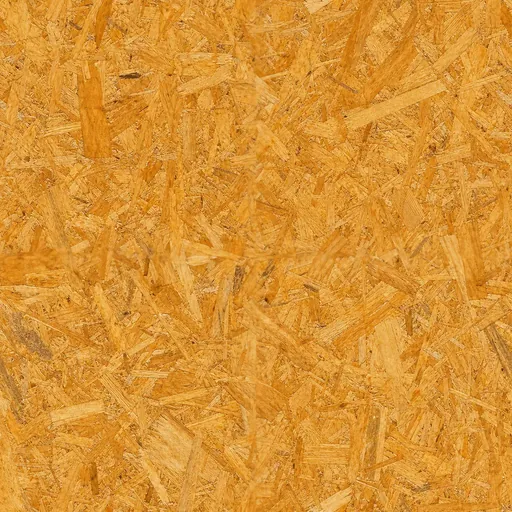 OSB16 $/m²
 Plywood24 $/m²
Key differences
- OSB is roughly 33% cheaper (16 $/m² vs 24 $/m²).
Specifications side by side
| Property | OSB | Plywood |
|---|---|---|
| Average price (United States) | 16 $/m² | 24 $/m² |
| Thermal conductivity | 0.13 W/(m·K) | 0.15 W/(m·K) |
| Density | 650 kg/m³ | 600 kg/m³ |
| Combustibility | Combustible | Combustible |
Catalog values are broad planning references. Structural capacity depends on the actual panel grade, thickness, span rating, orientation, support spacing, fastening and manufacturer data.
OSB or plywood for subfloor, roof and walls
| Application | Practical starting point | What to verify |
|---|---|---|
| Wall sheathing | Rated OSB is often the economical choice; rated plywood is also suitable. | Shear-wall schedule, panel orientation, edge support and fasteners. |
| Roof sheathing | Either rated panel can work. Plywood is often preferred when rain exposure or edge swelling during a delayed dry-in is a concern. | Span rating, roof loads, clips or blocking, fastening and roofing-system requirements. |
| Subfloor | Rated tongue-and-groove OSB is widely used; plywood is a conservative choice where construction moisture and edge stability matter. | Joist spacing, panel thickness, glue and screw schedule, underlayment and finish-floor requirements. |
| Cabinets and shelving | Plywood usually gives cleaner faces and edges and is easier to finish. | Veneer grade, core quality, fastener loads and finish. |
| Concrete forms | Form-grade plywood is usually the relevant product, especially when surface finish or reuse matters. | Form rating, support spacing, release agent and allowable pressure. |
OSB vs plywood strength, moisture and cost
Is OSB stronger than plywood?
There is no safe material-only answer. Panels with the required grade and span rating can be specified for many of the same structural applications. Compare the stamp and design values of the exact products; thickness alone does not prove equivalent capacity.
What happens when the panels get wet?
Both products should be detailed to stay dry. OSB edges can remain swollen after prolonged wetting, while plywood generally dries more quickly but can still warp or delaminate when the wrong grade is repeatedly exposed. An exposure rating for construction moisture is not permission for permanent outdoor exposure.
Which one costs less?
The Gardmi catalog estimate above uses current broad US planning prices, but local quotes can reverse or narrow the gap. Compare equal thickness, grade, span rating and edge profile, then include waste, clips, blocking, fasteners and any premium moisture-resistant product in the installed cost.
Structural-panel reference
The American Wood Council sheathing guide describes both OSB and plywood as wood structural panels and explains their construction. For a build, use the stamped panel rating, approved plans, manufacturer instructions and locally adopted code.
Where each one fits
- OSB
- Sheathing frame walls, roof decks and subfloors of houses.
- Plywood
- Subfloors, wall sheathing and formwork in house construction.
Garden planner app for phone and computer
- An icon on the home screen — back to your plot in one tap
- Full screen without the address bar — more room for the plan
- The same projects on phone and computer — cloud autosave
You are already in the app — gardmi is installed.