Coverage you can see
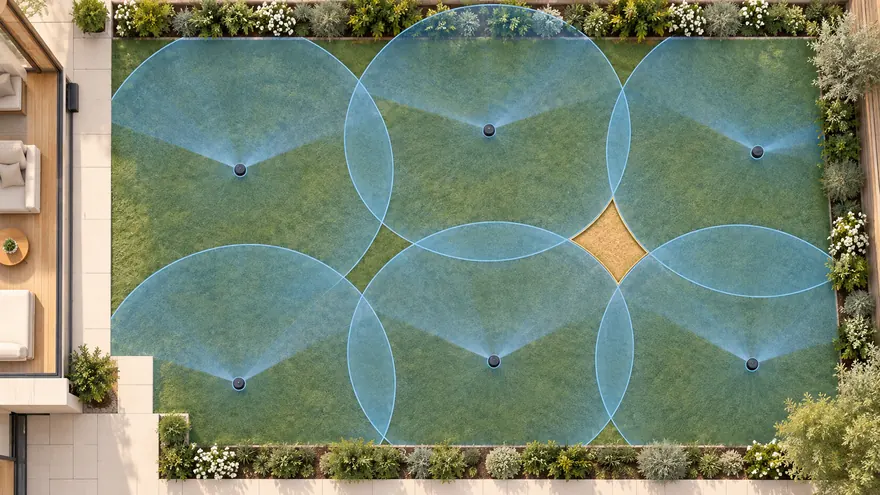
Every sprinkler draws its coverage — a circle, an adjustable sector with 0/90/180/270° snapping, an ellipse or a strip for rectangular nozzles. Drag the on-canvas handles or type exact metres.
 gardmi 🇺🇸
Garden site planner
gardmi 🇺🇸
Garden site planner
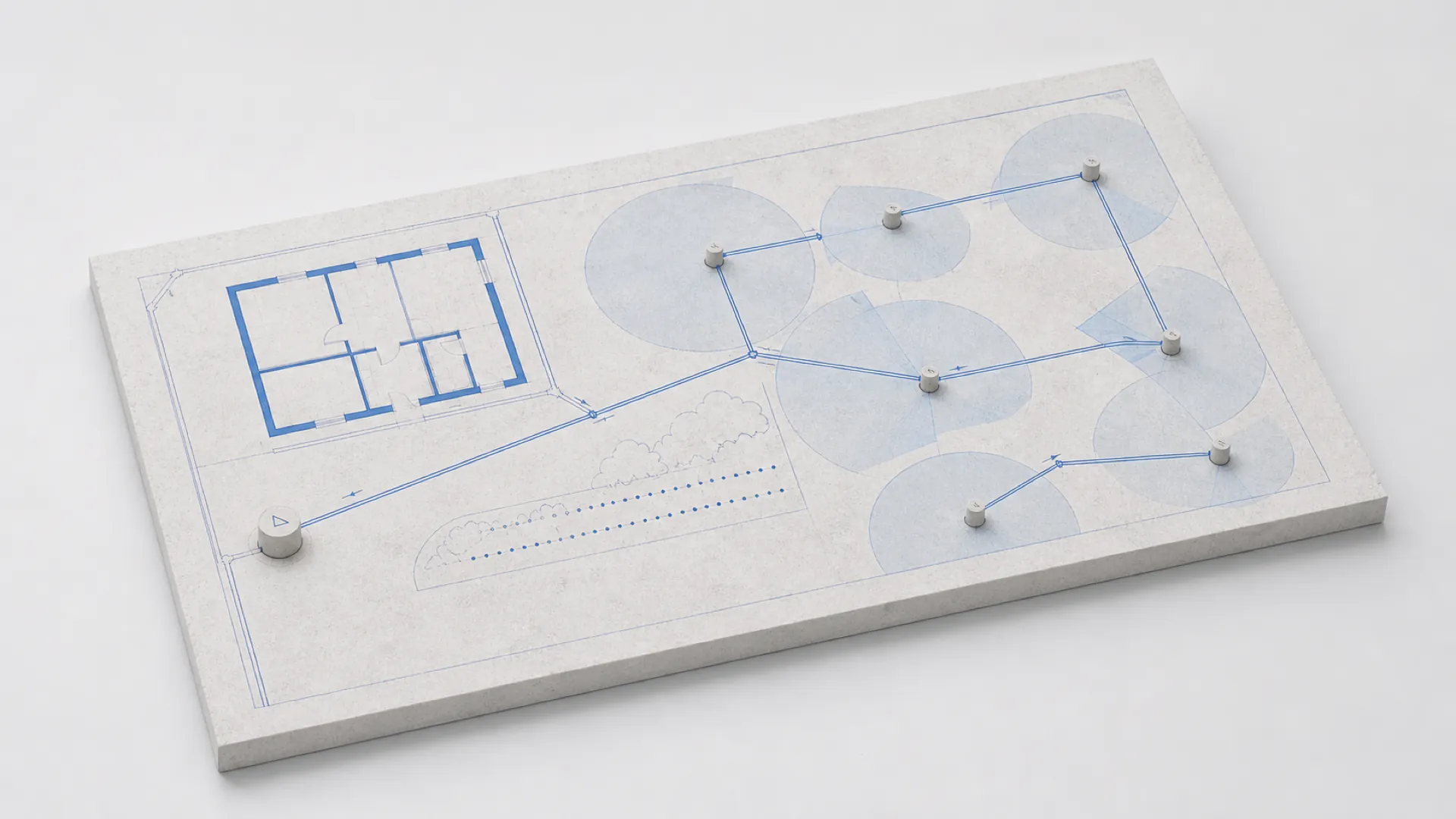
Plan the irrigation of your plot online. Draw pipes, place sprinklers and drip lines right on the plot plan — gardmi shows the coverage of every sprinkler, sums the water flow along each pipe, picks the diameters, splits the system into valve zones and recommends a pump. Even if this is your first irrigation project, the editor won't let you get the hydraulics wrong.
 Types of irrigation
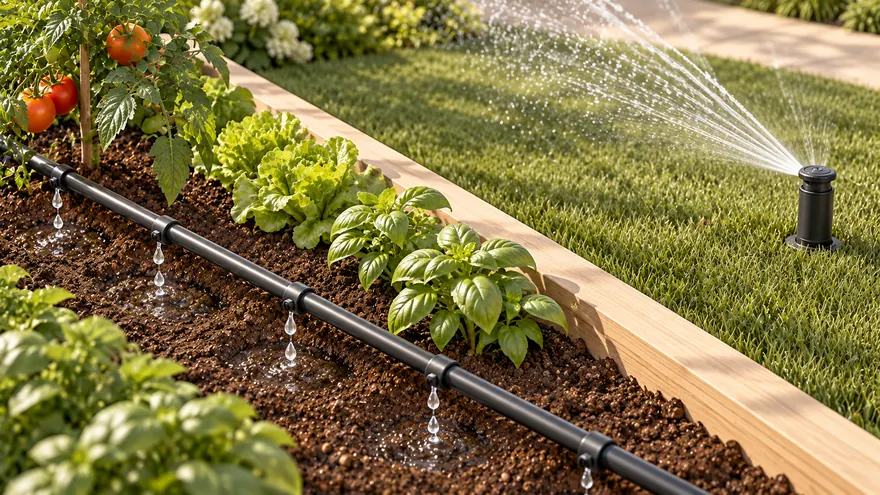
Sprinklers for the lawn, drip lines for beds and hedges
Types of irrigation
Sprinklers for the lawn, drip lines for beds and hedges
 Equipment
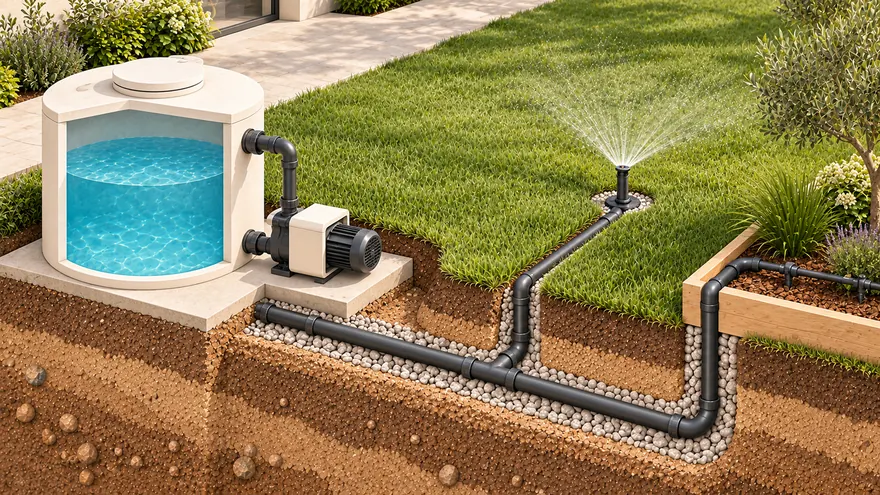
Pump, tank, valves and PE pipes — what each one does
Equipment
Pump, tank, valves and PE pipes — what each one does
 Coverage you can see
Each sprinkler draws its circle or sector — dry gaps show at once
Coverage you can see
Each sprinkler draws its circle or sector — dry gaps show at once
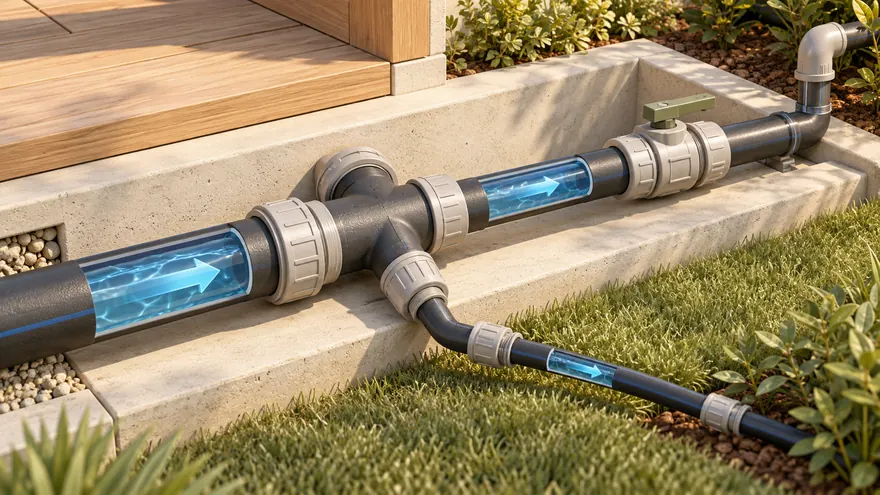 Live hydraulics
Flow, pipe diameters and zones — automatic
Live hydraulics
Flow, pipe diameters and zones — automatic
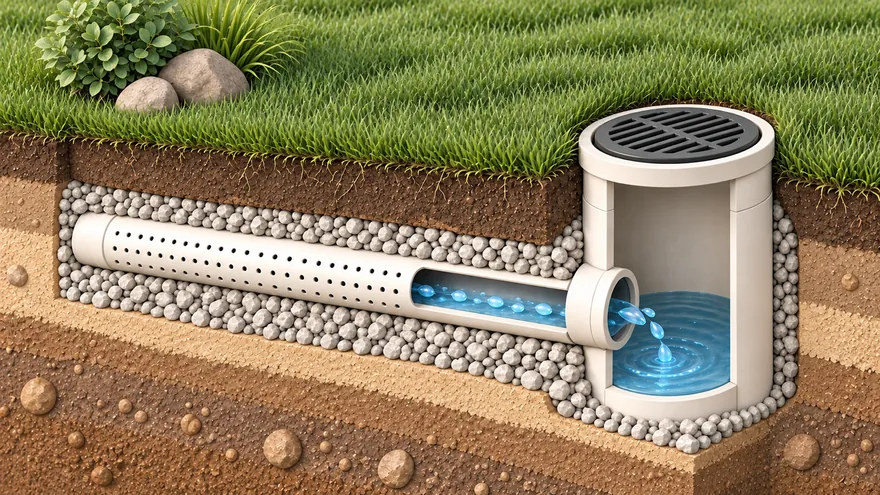 Drainage
Slopes, depths and the outlet checked for you
Drainage
Slopes, depths and the outlet checked for you
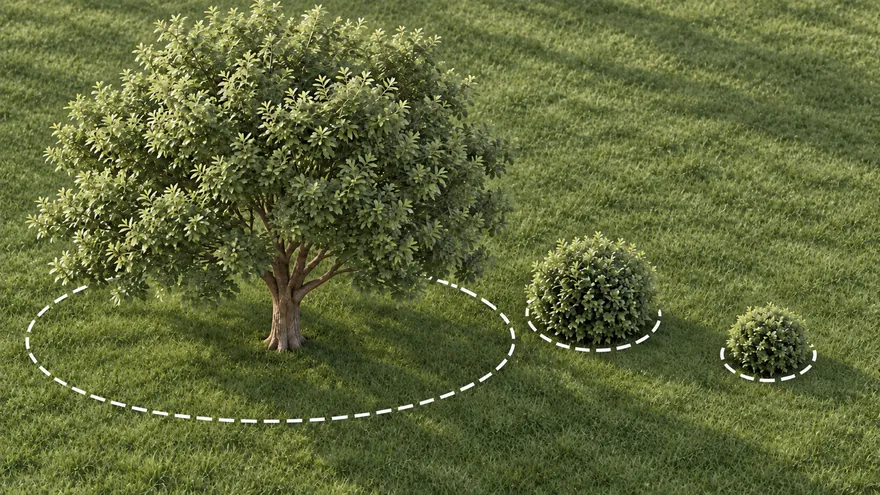 Plants
Trees and shrubs with their real crown, light and watering needs
Plants
Trees and shrubs with their real crown, light and watering needs
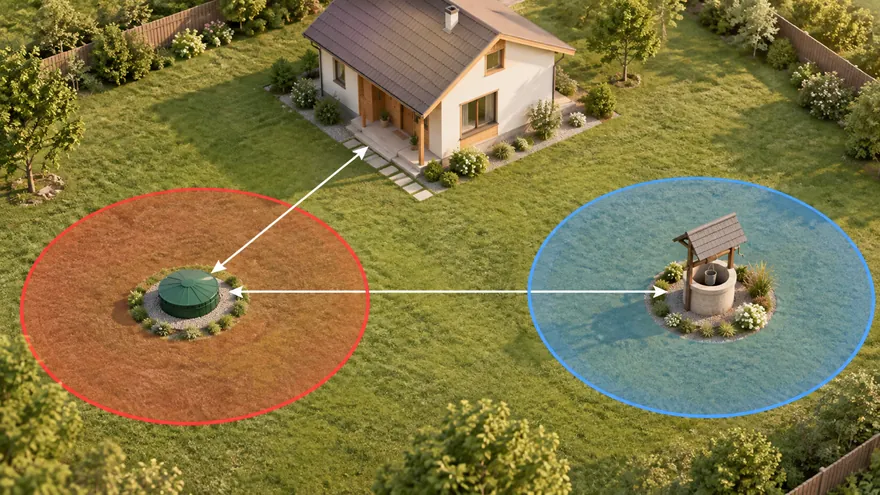 Septic, well and setbacks
Sanitary zones draw themselves, violations turn red
Septic, well and setbacks
Sanitary zones draw themselves, violations turn red
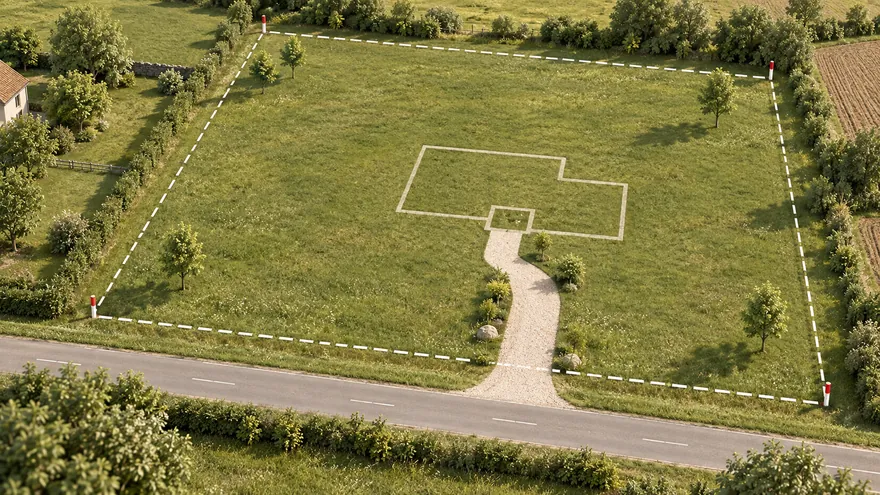 Plot plan
Boundary from the cadastre, a satellite map or a survey — in real metres
Plot plan
Boundary from the cadastre, a satellite map or a survey — in real metres
Every sprinkler draws its coverage — a circle, an adjustable sector with 0/90/180/270° snapping, an ellipse or a strip for rectangular nozzles. Drag the on-canvas handles or type exact metres.
Flow accumulates along the graph from every sprinkler to the source; each pipe shows its litres per minute and diameter. Move a sprinkler — the numbers update as you drag.
For the coverage you set, gardmi suggests matching sprinkler models of the major manufacturers — Hunter, Rain Bird, Gardena — so the plan maps to actual store shelves.
Pipes are priced per metre and equipment per piece, summed into an editable estimate; export the plan over the satellite image to PNG or PDF.
Pop-up sprinklers water the lawn: spray heads cover 2–5 m, rotors reach 5–15 m, MP rotators fall in between and tolerate low pressure. Each covers a full circle or an adjustable sector.
A drip line feeds water right to the roots of beds, hedges and the greenhouse — emitters every 30 cm or so, minimal evaporation, works even from a barrel with low pressure.
A lawn needs even coverage: sprinklers are placed so their circles overlap (head-to-head), and matched precipitation keeps wet and dry spots away. gardmi shows the coverage so gaps are visible at once.
Trees get root bubblers; for the hose there are yard hydrants — a quick-coupling water point on the network. Both are ordinary nodes of the same pipe graph in gardmi.
An automatic system is a few standard parts: a water source with a pump, a storage tank so the well isn't drained dry, valves that switch the zones, and the pipes that tie it together.
The pump must give the flow of the biggest zone at the sprinklers' working pressure, plus friction losses. gardmi computes m³/h and the head with a 20% reserve and shows the spec to buy.
A low-yield well cannot feed sprinklers directly — a tank accumulates water and the pump takes it from there. Water in the tank also warms up, which plants prefer.
Electric valves split the network into zones that water in turn from a controller. gardmi groups the sprinklers behind each valve and checks the zone against the source flow.
Irrigation runs on PE (HDPE) pipe, 16–50 mm, buried a spade deep. The diameter follows from the flow: gardmi keeps the speed under 1.5 m/s and marks every run with its diameter.
Import the plot by cadastral number or trace it over a satellite map, then mark the lawn, beds, hedges and trees — that is what decides where sprinklers and drip lines go.
Click along the pipe route from the source; where lines cross, gardmi drops a junction. Place sprinklers on the nodes — the coverage circle or sector of each one is visible right away, drag its handles to fit the lawn.
gardmi sums the flow along every pipe, assigns diameters, splits the sprinklers into valve zones and computes the pump: flow of the biggest zone plus head with a reserve. Problems light up in red before you buy anything.
Pipe metres, sprinklers, valves, the tank and the pump turn into a cost estimate in your currency — export it with the plan to PNG or PDF and take it to the store.

You are already in the app — gardmi is installed.
Yes. gardmi installs straight from the browser, without App Store or Google Play: on Android and in Chrome or Edge on a computer press “Install the app”, on iPhone open the site in Safari and choose Share → Add to Home Screen. The app opens full-screen from its icon and keeps the same cloud projects.
Each sprinkler's flow follows from its coverage area and precipitation rate, a drip line — from its emitter spacing. gardmi sums the flow over every pipe automatically: you see litres per minute on each run and the total the source must supply.
Keep the water speed under ~1.5 m/s, otherwise friction losses eat the pressure. gardmi picks a PE pipe diameter (16–50 mm) for every run from its actual flow and highlights undersized pipes.
A pump is chosen by the flow of the biggest zone (m³/h) and the head — sprinkler working pressure plus friction losses, with a ~20% reserve. gardmi computes both from your plan and shows the recommended spec.
A typical source cannot feed all sprinklers at once, so the system waters in zones switched by valves. gardmi groups sprinklers by valves, checks each zone against the source flow and warns when a zone is too big.
gardmi is a free online planner. Flow and pressure figures here are general guidance — check the specs of your actual source and equipment before buying.