Small palm
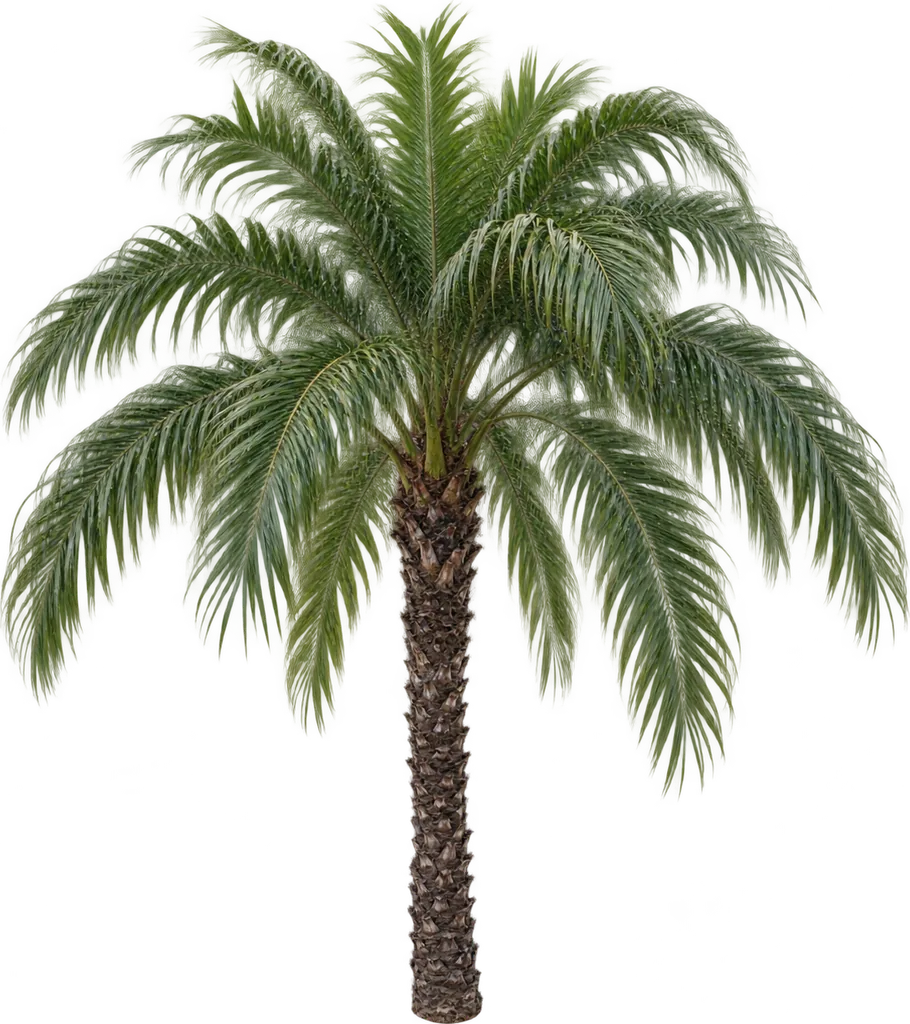
Pygmy date palm
Phoenix roebelenii
Compact feather palm up to about 3.5 m tall and 1.8–2.4 m wide (UF/IFAS). Gardmi uses a 2 m crown. Frost-tender: for mild coastal gardens or containers moved under cover in winter.
Planning parameters
Use these values as a practical planning envelope: they describe the adult plant, not the young seedling.
- Adult height
- 2-3.5 m
- Crown diameter
- 2 m
- Root zone
- 1.5 m
- Root type
- Compact fibrous root ball; suits planters and courtyards
- Recommended setback
- About 1 m from walls; keep fronds clear of paths
- Growth rate
- Slow
- Hardiness
- USDA 10a (damage near −1 °C)
- Crown density
- Medium
Site requirements
These conditions decide whether the plant will establish well after planting.
- Light
- Sun to partial shade
- Watering
- Regular, moderate
- Soil type
- Moist, well-drained, fertile soil
- Drainage
- Avoid waterlogging
- Soil pH
- Slightly acidic to neutral
Root system and placement
Plan a root zone of about 1.5 m diameter
Garden role and season
These fields help choose the plant by composition, privacy, flowering and year-round value.
- Form
- Small single-trunk feather palm; often planted 2–4 together
- Foliage
- Glossy dark green arching pinnate fronds
- Season
- Year-round
- Bloom
- Small creamy flowers in spring
- Fruit
- Small black dates; not grown for eating
- Garden use
- Courtyards, pool sides, planters and underplanting beneath taller palms
Care and risks
This is the practical part for future maintenance and safe placement on the plot.
- Maintenance
- Keep evenly moist in dry weather; palm fertilizer with magnesium
- Pruning
- Remove only dead fronds
- Risks
- Sharp spines at the base of the fronds — plant away from paths and play areas
Other plants
Return to the catalog or compare nearby options before placing plants on the site plan.