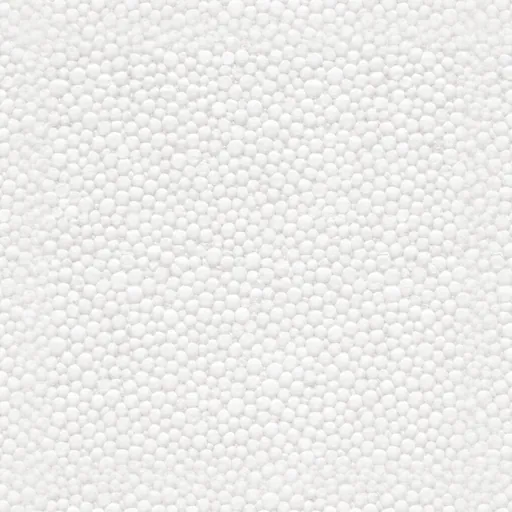
EPS foam insulation
EPS is expanded polystyrene: a rigid, lightweight insulation made by molding expanded beads. Choose a board by declared thermal resistance, compressive resistance, moisture exposure and the complete wall, roof, foundation or floor assembly.
Comparison unit: m² · use the exact product data and assembly specification
What is EPS foam insulation?
EPS means expanded polystyrene. Steam expands small polystyrene beads and fuses them in a mold, leaving the recognizable bead texture. Construction products are cut or molded into rigid boards and blocks; the name alone does not state strength, thermal resistance or suitability for a particular assembly.
EPS is not the same product as XPS, which is extruded polystyrene. “Styrofoam” is a brand name associated with XPS and should not replace the technical product name in a specification.
The EPS Industry Alliance describes EPS as a lightweight material used for building insulation, protective packaging and engineered applications. Use the exact manufacturer's product data for design values.
EPS foam R-value and ASTM C578 types
Thermal resistance rises with thickness, but there is no single R-value for every EPS board. ASTM C578 separates rigid cellular polystyrene insulation into types with different density, thermal resistance and compressive resistance. Common construction types are approximately R-3.6 to R-4.2 per inch; calculate the layer from the declared value for the chosen board.
| Selection input | Why it matters | Where to verify it |
|---|---|---|
| ASTM C578 type | Connects the product to minimum physical-property requirements. | Product data sheet, certification or code report. |
| R-value at thickness | Determines the insulation contribution of the actual layer. | Declared thermal resistance and project energy calculation. |
| Compressive resistance | Must suit floors, roofs, foundations or engineered fill loads. | Declared value and structural or assembly design. |
| Water absorption and vapor permeance | Affect below-grade, roof and enclosure detailing. | Tested product values and moisture-control design. |
| Fire performance | Foam-plastic protection depends on the complete tested assembly. | Code, listing, thermal barrier and manufacturer instructions. |
ASTM C578 covers EPS and XPS insulation types and identifies thermal resistance, compressive resistance, water absorption, vapor permeance and dimensional stability among the specified properties.
EPS insulation board uses
- Walls: continuous exterior insulation, cavity systems, insulated concrete forms and structural insulated panels when part of an approved assembly.
- Roofs: flat or tapered boards under a compatible roof system, with attachment, cover board and membrane specified together.
- Foundations and below grade: boards selected for the design load, moisture exposure, drainage and protection layer.
- Floors and slabs: thermal breaks beneath slabs or radiant floors when compressive resistance and long-term loading are verified.
- Geofoam: large lightweight blocks used as engineered fill; this is a civil-design application, not a substitute chosen from a generic insulation price.
Board edges, facings, adhesives and fasteners must be compatible with the product and assembly. Do not leave EPS exposed to weather, impact, incompatible solvents or fire unless the tested system explicitly permits that condition.
How to choose EPS foam board
- Name the application and assembly. Record wall, roof, foundation, floor or engineered fill and every adjacent layer.
- Set the thermal target. Calculate required thickness from the declared R-value, climate and applicable energy code.
- Check loads. Match compressive resistance and long-term behavior to the structural design rather than selecting by density alone.
- Design moisture control. Coordinate drainage, waterproofing, vapor control, joints, flashings and exposure during construction.
- Verify fire protection. Specify the tested assembly, thermal or ignition barrier, facings and permitted details required by code.
- Confirm installation. Use approved adhesive or fasteners, stagger and seal joints as required, and protect the board from damage and sunlight.
Price per square foot or square meter is not comparable until board type, thickness, edge profile, facing, quantity and delivery are equal. Gardmi can reserve the layer on an early plan, but it does not perform the energy, structural, moisture or fire design.
EPS foam insulation questions
What is EPS foam insulation?
It is rigid expanded polystyrene made by molding expanded beads. Building products are supplied in types and thicknesses with declared thermal, strength and moisture properties.
What R-value does EPS foam have?
It varies by ASTM type, density, thickness and test condition. Common construction products are roughly R-3.6 to R-4.2 per inch; use the value declared for the exact board.
Is EPS the same as XPS or Styrofoam?
No. EPS is expanded bead foam; XPS is extruded foam. Styrofoam is a brand name rather than the generic name for all polystyrene insulation.
Can EPS foam be left exposed?
Do not assume it can. Weather, impact and fire protection depend on the product listing, tested assembly, manufacturer instructions and applicable code.
Other materials



Garden planner app for phone and computer
- An icon on the home screen — back to your plot in one tap
- Full screen without the address bar — more room for the plan
- The same projects on phone and computer — cloud autosave

You are already in the app — gardmi is installed.