
Garage ramp: slope, length and placement
A ramp lets a car drive up to a garage or house set on a high plinth — common on flood-prone plots where the floor is deliberately raised. Get the slope, length and drainage right and the car never scrapes and water never runs inside.
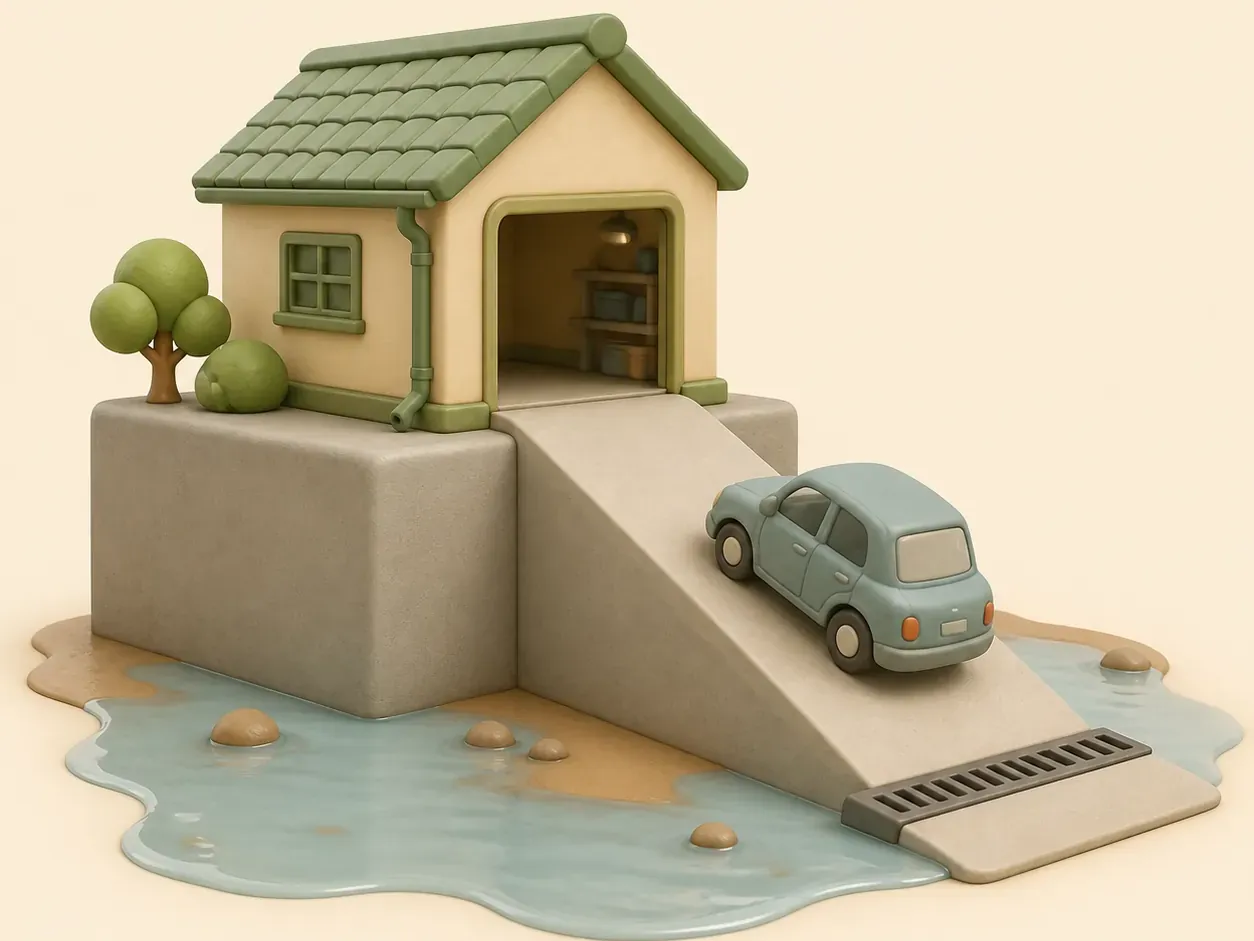
Driveway ramp into a garage: what to calculate
-
 Ramp slope for a car
10–12% for every day, 18–20% only for short ramps
Ramp slope for a car
10–12% for every day, 18–20% only for short ramps
-
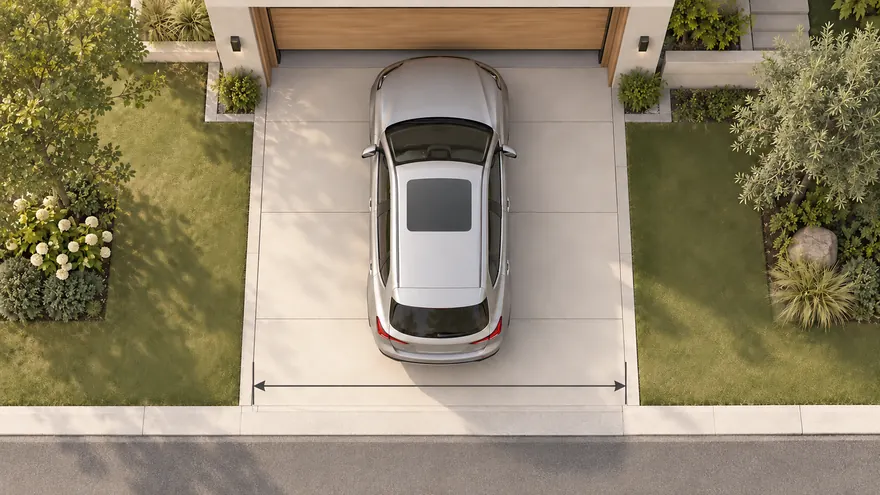 Ramp width
From 2.5–3 m for one car to 5–5.5 m for two
Ramp width
From 2.5–3 m for one car to 5–5.5 m for two
-
 Transitions at the top and bottom
Flatter joints so the bumper and underbody do not scrape
Transitions at the top and bottom
Flatter joints so the bumper and underbody do not scrape
-
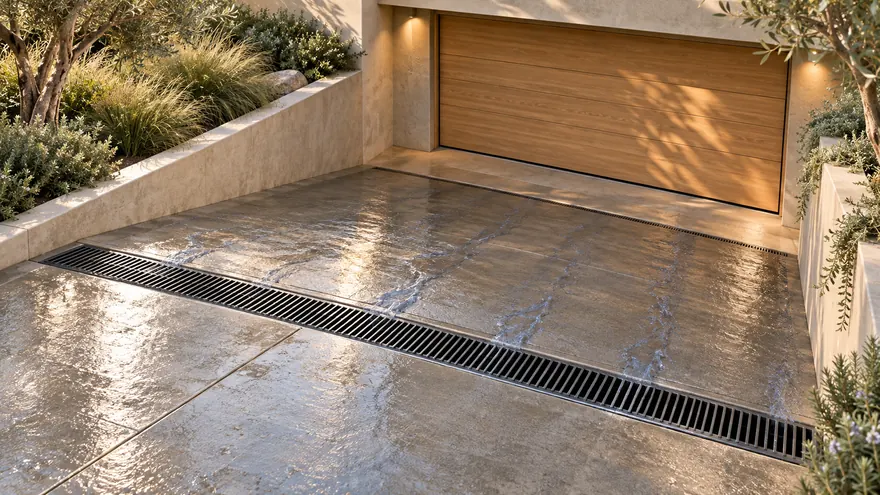 Drainage for flood-prone sites
A channel at the foot keeps water out of the garage
Drainage for flood-prone sites
A channel at the foot keeps water out of the garage
-
 Ramp types in the planner
Open on an earth fill or with real side walls
Ramp types in the planner
Open on an earth fill or with real side walls
-
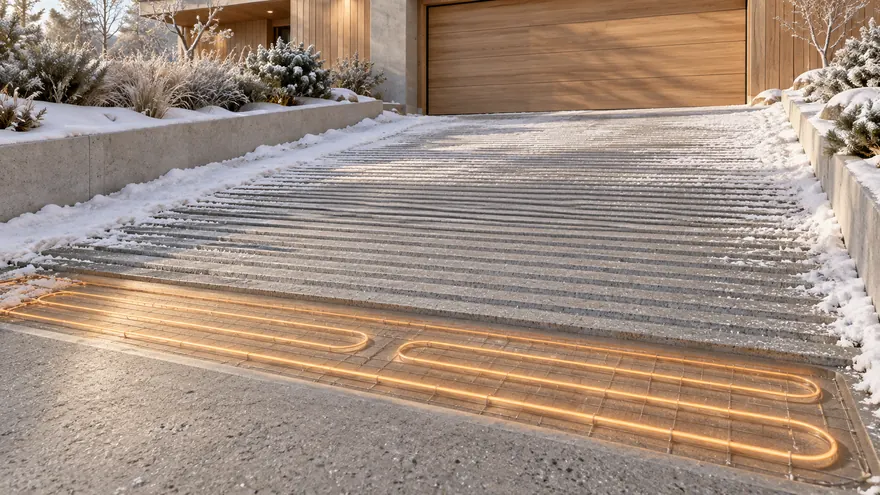 Surface and winter
Anti-slip grooves and a heating cable against ice
Surface and winter
Anti-slip grooves and a heating cable against ice
-
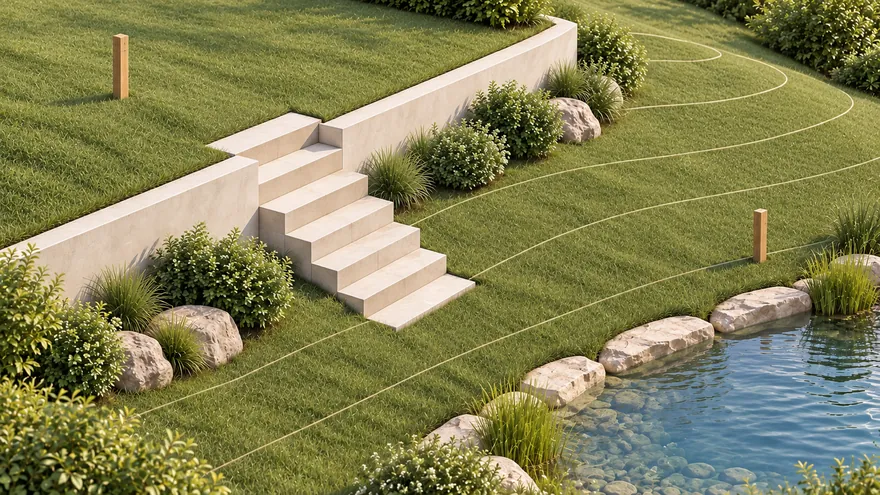 Terrain and water
Survey elevations become real ground; flooding and waterfront
Terrain and water
Survey elevations become real ground; flooding and waterfront
-
 3D and walkthrough
From plan to 3D in one click; walk at eye level or in VR
3D and walkthrough
From plan to 3D in one click; walk at eye level or in VR
Ramp slope for a car
Slope is the main parameter. Too steep and the car scrapes or loses grip in winter; too shallow and the ramp eats the whole yard. For a private driveway ramp aim for a comfortable grade and keep the steep maximum for short ramps only.
In the planner the ramp shows its slope in percent and degrees live as you change its length and height — so you can dial in a comfortable grade before building.
Ramp width
Transitions at the top and bottom
A car has limited ground clearance and break-over angle. Where the flat yard meets the ramp, and where the ramp meets the flat garage floor, a sharp angle makes the bumper and underbody scrape. Soften both joints with a short, flatter transition (apron) of about half the ramp slope, or round them off. The steeper the ramp, the more important the transitions.
Drainage for flood-prone sites
This is the detail that protects the garage. Water runs down the ramp toward the doors, so put a drainage channel with a grate across the foot of the ramp (and, for a sunken ramp, a raised kerb around the pit). Tie the channel into the storm drain. Without it, every downpour sends water under the garage door.
Ramp types in the planner
The Ramp object has two types — switch them in the inspector:
Side walls instead of tiny curbs
A low curb is useless — a wheel rolls right over it. Edges only make sense as real elements: leave the ramp fully open (an earth-fill approach to a raised plinth), or build proper retaining / guide walls 0.3 m or higher when the ramp has vertical sides or is cut below grade. In the planner side walls are optional and their height is adjustable.
Surface and winter
Use a textured, anti-slip surface: brushed or grooved concrete with grooves across the direction of travel, or rough paving. In cold regions a snow-melt heating cable in the ramp removes the winter risk of an icy slope right at the garage — otherwise even a gentle ramp becomes a slide.
Ramp and site planner app
- An icon on the home screen — back to your plot in one tap
- Full screen without the address bar — more room for the plan
- The same projects on phone and computer — cloud autosave

You are already in the app — gardmi is installed.

FAQ
Can I install gardmi as an app on my phone?
Yes. gardmi installs straight from the browser, without App Store or Google Play: on Android and in Chrome or Edge on a computer press “Install the app”, on iPhone open the site in Safari and choose Share → Add to Home Screen. The app opens full-screen from its icon and keeps the same cloud projects.
What slope should a garage ramp have?
For everyday use aim for 10–12% (about 6–7°). Up to 18–20% is a practical maximum for short ramps only — low cars start to scrape. Soften the top and bottom joints with flatter transitions.
How do I calculate the ramp length?
Divide the rise by the slope: length = rise ÷ (slope ÷ 100). A 0.6 m rise at 10% needs 6 m of horizontal length, at 12% — 5 m. Use the horizontal length, not the length of the inclined surface.
How wide should a garage ramp be?
2.5–3 m for one car — its width plus room to maneuver; 5–5.5 m for a double garage entry.
Can I check the ramp slope in gardmi?
Yes. Add the Ramp object and set its rise and length: the inspector shows the slope in percent and degrees live, and you see the ramp on the site plan and in 3D. It is an early layout check — confirm the design with local rules and a designer.
More about the planner
What problem a ramp solves
On flood-prone or low-lying plots the garage floor and the house plinth are raised 0.3–1.2 m above the yard so storm and melt water stays out. That raise creates a step a car cannot climb. A ramp bridges the difference with a smooth, drivable incline — and, with a drainage channel at its foot, keeps the runoff that gathers on the slope from flowing into the garage.
Best-practice checklist
- Keep everyday slope at 10–12%, reserve 18–20% for short ramps only.
- Soften the top and bottom joints with transitions so the car does not scrape.
- At least 2.5–3 m wide for one car; 5–5.5 m for two.
- Always put a drainage channel at the foot on flood-prone plots.
- Use a rough, anti-slip surface; add a heating cable in cold climates.
- Use real retaining walls, not a token curb a wheel rolls over.
Important limitation
This is a planning aid, not a construction project. Figures are typical practice for private driveway ramps; confirm slope, drainage and structure with your local codes and a qualified designer before building.