شبكة موصولة واحدة
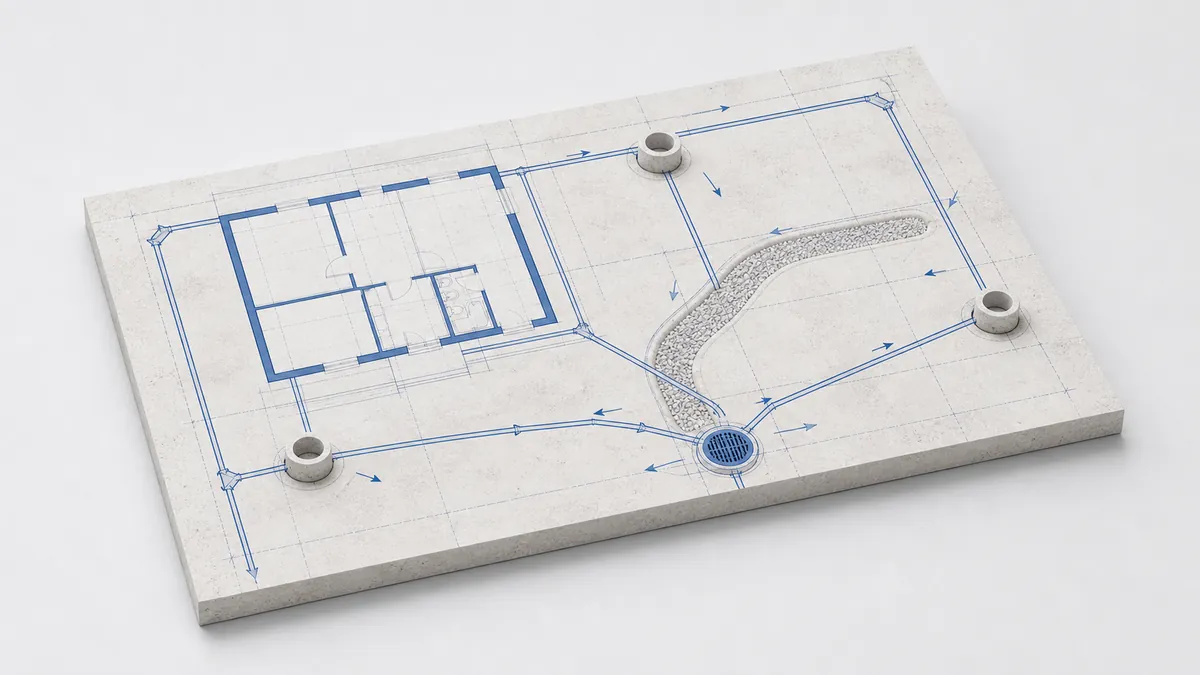
تشكل الأنابيب والقنوات والآبار رسماً بيانياً واحداً. تقاطع خطين يؤدي لظهور تقاطع؛ وعند سحب بئر، تتبعها الأنابيب المتصلة.
 gardmi 🇦🇪
مخطط قطعة الأرض
gardmi 🇦🇪
مخطط قطعة الأرض
خطّط تصريف أرضك عبر الإنترنت. ارسم أنابيب التصريف والقنوات السطحية والآبار مباشرة على خريطة قمر صناعي — يربطها gardmi في شبكة واحدة، ويضع عقدة عند كل تقاطع، ويظهر الميل وعمق كل بئر، وينبّه أين لن يتدفّق الماء.
 أنواع التصريف
سطحي أو عميق، خطي أو نقطي — أيّها تحتاج قطعة الأرض
أنواع التصريف
سطحي أو عميق، خطي أو نقطي — أيّها تحتاج قطعة الأرض
 الأنابيب والآبار
الأنبوب وبئر التفتيش وبئر الامتصاص ومصيدة الأمطار — وظيفة كل منها
الأنابيب والآبار
الأنبوب وبئر التفتيش وبئر الامتصاص ومصيدة الأمطار — وظيفة كل منها
 الميل والعمق والصقيع والمخرج
المحرر ينبّه إلى المسار الذي لن تجري فيه المياه
الميل والعمق والصقيع والمخرج
المحرر ينبّه إلى المسار الذي لن تجري فيه المياه
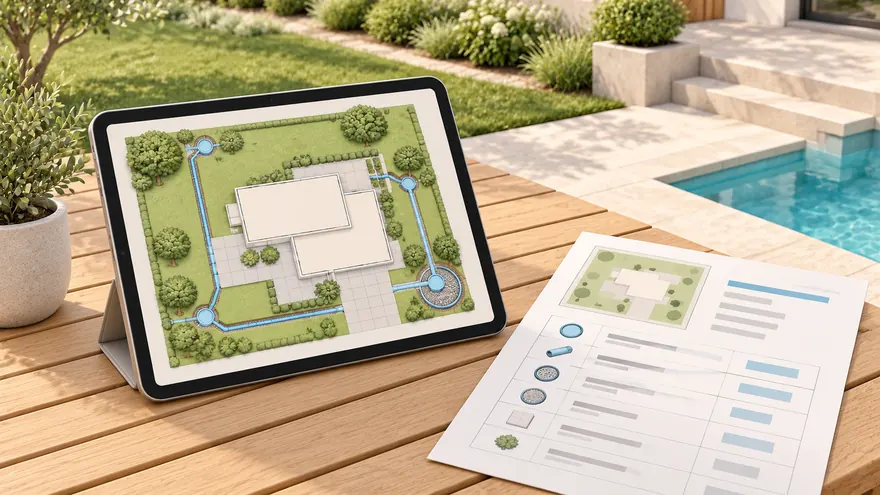 تقدير وتصدير
أمتار الأنابيب والآبار تتحول إلى تقدير للتكلفة
تقدير وتصدير
أمتار الأنابيب والآبار تتحول إلى تقدير للتكلفة
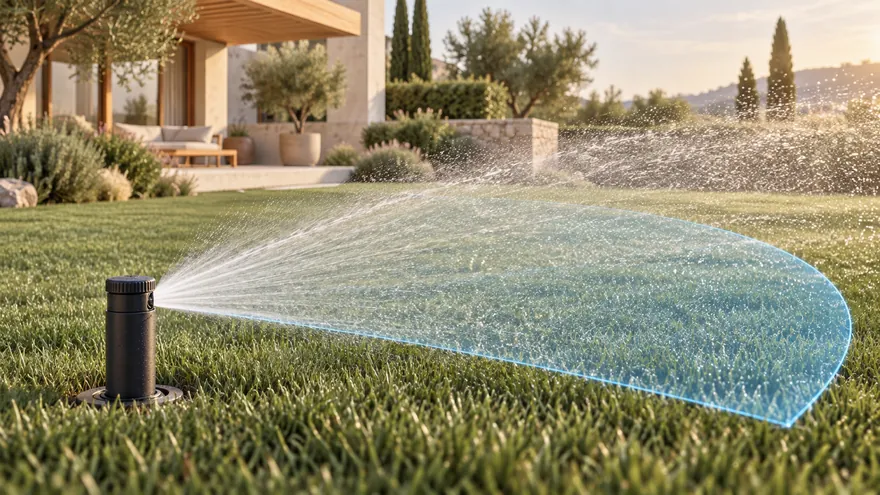 الري
تغطية الرشاشات وأقطار الأنابيب والمناطق والمضخة
الري
تغطية الرشاشات وأقطار الأنابيب والمناطق والمضخة
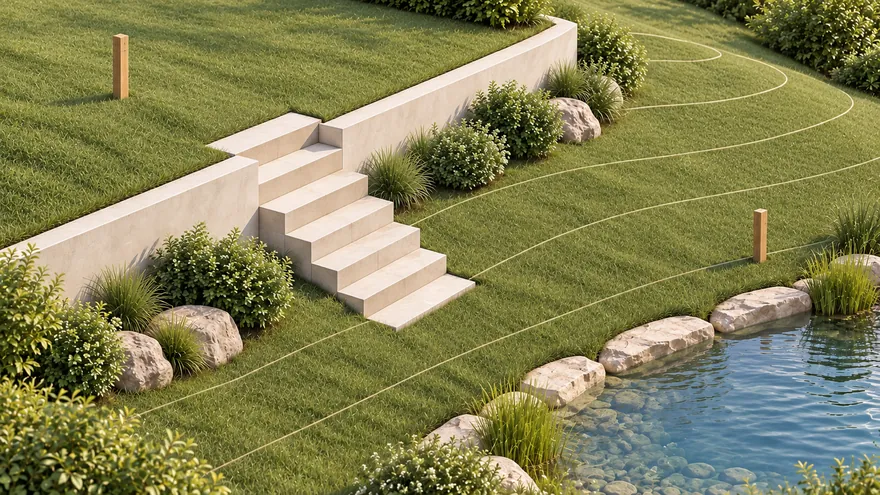 التضاريس والمياه
مناسيب المسح تتحول إلى تضاريس حقيقية؛ الغمر والواجهة المائية
التضاريس والمياه
مناسيب المسح تتحول إلى تضاريس حقيقية؛ الغمر والواجهة المائية
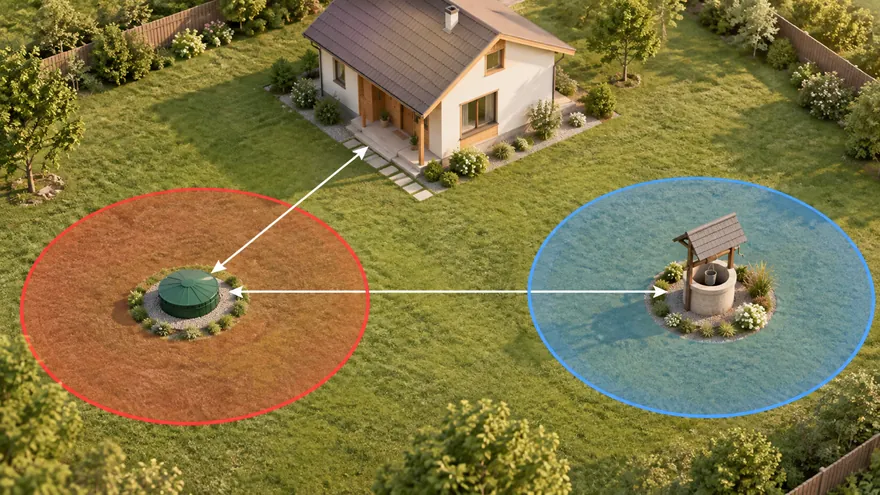 خزان الصرف والبئر ومسافات الأمان
مناطق الحماية الصحية تُرسم تلقائيًا، والمخالفات تظهر بالأحمر
خزان الصرف والبئر ومسافات الأمان
مناطق الحماية الصحية تُرسم تلقائيًا، والمخالفات تظهر بالأحمر
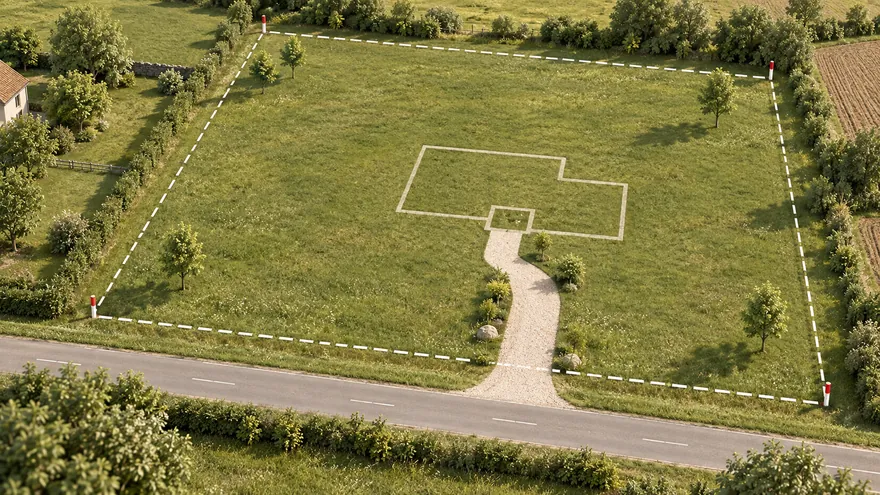 مخطط قطعة الأرض
الحدود من السجل العقاري أو صور الأقمار الصناعية أو المسح الطبوغرافي — بالأمتار الحقيقية
مخطط قطعة الأرض
الحدود من السجل العقاري أو صور الأقمار الصناعية أو المسح الطبوغرافي — بالأمتار الحقيقية
تشكل الأنابيب والقنوات والآبار رسماً بيانياً واحداً. تقاطع خطين يؤدي لظهور تقاطع؛ وعند سحب بئر، تتبعها الأنابيب المتصلة.
يتم رسم كل مسار بعرضه الحقيقي، لتتمكن من رؤية المساحة التي تشغلها القناة أو الخندق — مع الشبكة أو الحصى أو الأحجار في الأعلى.
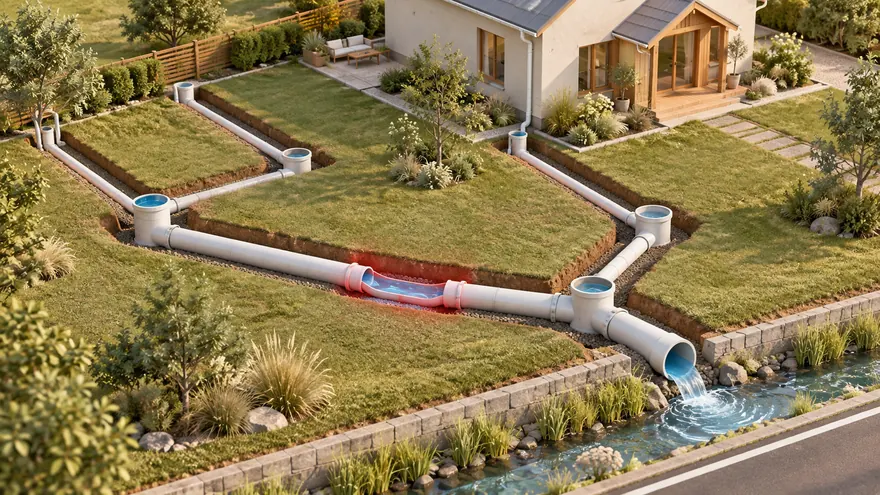
يتحقق المخطط من أن كل مسار يتدفق نحو الأسفل بميل عملي، ويقع تحت خط الصقيع، وأن الشبكة تصل بالفعل إلى مخرج.
يتم تسعير الأنابيب بالمتر والهياكل بالقطعة، وتُجمع في تقدير قابل للتعديل؛ قم بتصدير المخطط فوق صورة القمر الصناعي إلى ملف PNG أو PDF.
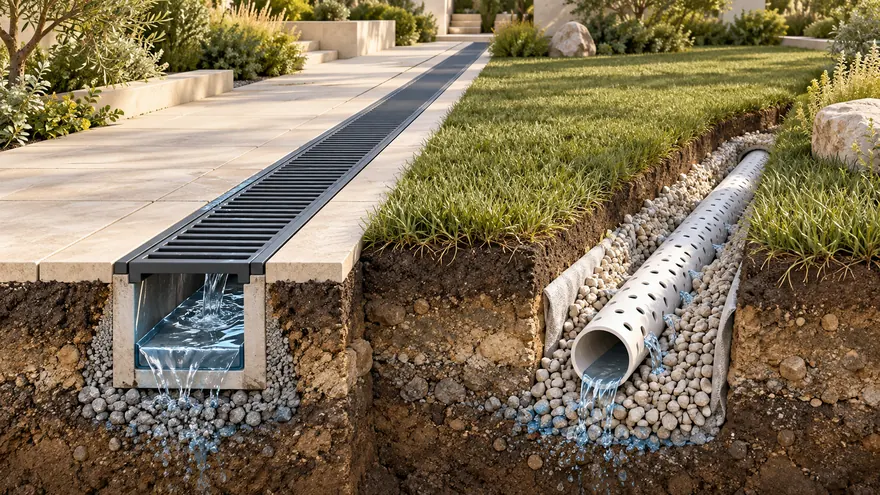
تصريف القنوات المزودة بشبكات، وأحواض التجميع عند المزاريب، وأنبوب التجميع، كلها تعمل على تصريف مياه الأمطار بعيدًا عن المسارات، والممر، والسقف إلى منفذ تصريف.
الأنابيب المثقبة في خندق حصوي تخفض منسوب المياه الجوفية وتحافظ على جفاف الأساس والحديقة — باستخدام أنماط الجدار، أو الحلقة، أو عظمة السمكة.
التصريف الخطي عبارة عن قناة متصلة على طول مسار أو جدار؛ أما التصريف النقطي فهو عبارة عن مدخل واحد عند نقطة منخفضة. كلاهما يغذي نفس شبكة التجميع.
لتصميم مصرف فرنسي، حدد المنطقة الرطبة، ومرر أنبوباً مثقباً عبر الحصى والنسيج الأرضي إلى مخرج معتمد، ثم سجل الارتفاعات العالية والمنخفضة ليتمكن المخطط من التحقق من الانحدار والعمق. الخندق المبطن (الجدول الجاف) هو قناة ضحلة مبطنة بالحجارة تبطئ وتمتص مياه الجريان السطحي.
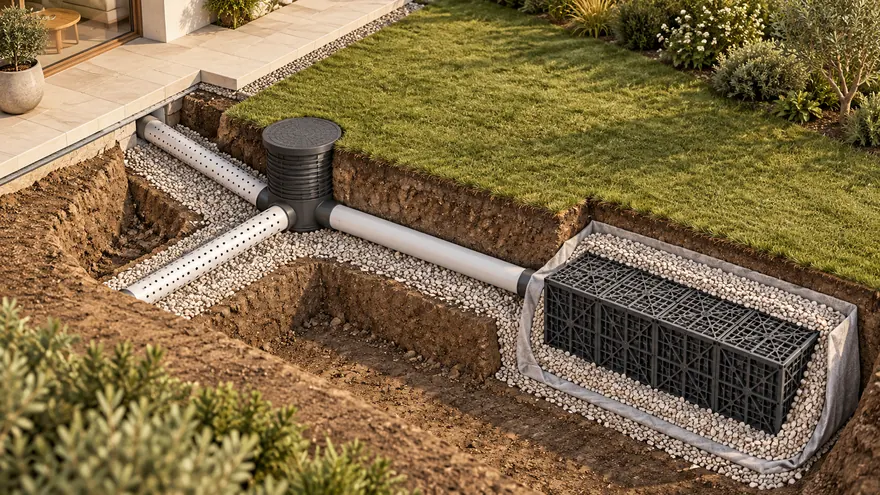
نظام التصريف يتكون من بضعة أجزاء قياسية. الأنبوب ينقل المياه؛ والآبار تسمح لك بالفحص، وتغيير الاتجاه، وربط المسارات؛ أما المنفذ أو بئر الامتصاص فهو المكان الذي يتم فيه تصريف كل شيء.
أنبوب مثقب (قطر 110) للمياه الجوفية، أو أنبوب صلب أملس (قطر 110–160) لمياه الأمطار. في gardmi، يحمل كل مسار قطره وميله ومادته الخاصة.
ضع بئر فحص أو بئر تحويل عند كل تقاطع، ومنعطف، وعند تغير القطر، وعلى الأقل كل 20–50 مترًا على المسار المستقيم، حتى يمكن تنظيف الخط.
يجب أن تنتهي الشبكة في مكان ما: حفرة امتصاص تسمح للمياه بالتسرب إلى التربة، أو منفذ إلى خندق أو شبكة صرف مياه الأمطار. يقوم gardmi بالتنبيه إذا كانت الشبكة بدون منفذ.
حوض التجميع هو المدخل النقطي الموجود تحت المزراب؛ أما مصيدة الرمل فتحجز الطمي قبل دخول الأنبوب حتى لا ينسد. كلاهما يوضع مباشرة على مسار القناة.
افتح قطعة أرضك على خريطة الأقمار الصناعية وحدد أماكن تجمع المياه — بجانب المنزل، على طول السياج، عند البوابة. يجب أن تجري المياه منحدرة من هناك إلى منفذ تصريف.
اختر أنبوبًا أو قناة وانقر على طول المسار؛ حيث يتقاطع خطان، يقوم gardmi بإسقاط تقاطع تلقائيًا. أضف آبار الفحص، أو حوض التجميع، أو بئر الامتصاص كعقد في الشبكة.
يُظهر كل مسار ميله وسهم التدفق باتجاه المنفذ. يقوم gardmi بحساب العمق عند كل بئر ويبرز أي مسار مستوٍ جدًا أو يقع فوق خط التجمد.
أمتار الأنابيب وعدد الآبار تتحول إلى تقدير للتكلفة بعملتك، جاهز للتصدير مع المخطط بصيغة PNG أو PDF.
أنت بالفعل داخل التطبيق — gardmi مثبّت.
نعم. يُثبَّت gardmi مباشرة من المتصفح، دون App Store أو Google Play: على Android وفي Chrome أو Edge على الكمبيوتر اضغط «تثبيت التطبيق»، وعلى iPhone افتح الموقع في Safari واختر «مشاركة» ← «إضافة إلى الشاشة الرئيسية». يفتح التطبيق بملء الشاشة من أيقونته، ومشاريعك في السحابة هي نفسها.
عائلتان: تصريف سطحي (قنوات، مصارف تجميع ومجمع مياه أمطار ينقل مياه الأمطار بعيداً عن الممرات والأسطح) وتصريف تحت سطحي (أنابيب مثقبة في حصى تخفض المياه الجوفية وتحمي الأساس). معظم المواقع تجمع بين الاثنين.
يعمل الصرف بالجاذبية، لذا يجب أن ينحدر كل مسار نحو المخرج — نحو 0.5% للأنبوب المثقّب (5 مم لكل متر) وحتى ~2% لأنبوب مياه الأمطار. يعرض gardmi الميل على كل مسار وينبّه إلى الأنبوب المستوي أكثر من اللازم لجريان الماء.
يجب أن يوضع المصرف المدفون تحت خط الصقيع لمنطقتك (حوالي 1.4 متر في وسط روسيا) ويصبح أعمق باتجاه المخرج مع تراكم الميل. يقوم gardmi بحساب العمق عند كل بئر من الميل ويحذر إذا كان المسار يقع فوق خط الصقيع.
نعم. يتم تسعير كل مسار بالمتر، وكل بئر أو مصرف تجميع أو مضخة بالقطعة؛ يقوم gardmi بجمعها في تقدير للمشروع يمكنك تعديله، بعملة بلدك.
استخدم gardmi لمقارنة المسارات والمنحدرات والأعماق والمخارج والكميات التقديرية. قبل التنفيذ، تحقق من نفاذية التربة، والمرافق المدفونة، وتصاريح التصريف، وعمق التجمد، والمتطلبات المحلية مع الجهات المختصة أو متخصص تصريف مؤهل.
gardmi مخطّط مجاني عبر الإنترنت. الأرقام هنا إرشادية — راجع الأنظمة المحلية لمنطقتك.